
The Philippines: an Answer to the South China Sea?

Nov 30, 2025
8 min read
Updated: Apr 14
This article is co-authored by Stacey Ngiam and Luo Xuhong. Cover image by Stacey Ngiam
*This article is published in collaboration with Discuss Diglett, a blog run by youths keen on sharing their love for law, politics and economics. For more, check out Discuss Diglett's website and Instagram @DiscussDiglett today!
Six claimants, one sea and 80 years of competing narratives. As the Philippines prepares to chair ASEAN in 2026, Manila is confident her fresh hand can finally restart diplomacy surrounding the South China Sea.
But a question remains: can any chair meaningfully shift the dynamics of one of Asia’s most complex maritime conflicts?
The South China Sea conflict goes back to the early colonial claims over islands like the Paracels and Spratlys, claims which their colonies inherited upon independence. These claims conflicted with China’s claims asserted in the 1992 Law on the Territorial Sea and Contiguous Zone, one rooted by a 1947 Chinese map outlining the “nine-dash line” demarcating territorial waters within 12 nautical miles seaward of the baselines. This set the stage for decades of conflict between the six claimants: China, Taiwan, Vietnam, the Philippines, Malaysia, and Brunei.
To assert her dominance in the region, China’s 1992 law legalised the use of force to protect her self-proclaimed sovereign territory. ASEAN responded with a joint declaration, calling for peaceful resolution and an exercise of restraint. But Beijing rejected multilateral engagement. She wanted one-on-one negotiations with individual claimant states.
But this piece of sea is too good to let go. The heart of maritime trade, the South China Sea located in the Pacific Ocean carries an estimated US$3-5 trillion in global trade annually. Beneath its waters lie a pot of wealth: fishing rights and untapped natural gas and hydrocarbon deposits, creating a golden economic opportunity.
In hopes to resolve the issue, the region saw various confidence-building measures (CBMs) over the decades, including Indonesia’s informal workshops to engage claimants in a neutral setting. A milestone came in 2002, when China and ASEAN adopted the Declaration on the Conduct of Parties (DOC), committing to peaceful management of the dispute in line with the United Nations Convention on the Law of the Sea (UNCLOS). Nonetheless, further attempts to develop a more binding Code of Conduct have since stalled.

As the Philippines prepares to chair ASEAN in 2026, this brings to question: Will we finally see the end of the South China Sea conflict?
The Unwritable Code of Conduct
According to incoming ASEAN Chair and current Foreign Affairs Secretary of the Philippines, Ma. Theresa Lazaro, one key aspiration of her upcoming chairmanship is to see through the conclusion of a code of conduct between ASEAN and China. This code of conduct aimed to outline a framework for which communications and negotiations can occur between claimants while maintaining regional peace and stability.
“It is indeed our intention and I think it is also the aspiration of all of ASEAN and even China to finish and to come up with the code.” said Secretary Lazaro at a press conference in November 2025.
This goal, however, remains difficult to achieve. Talks on creating a code of conduct have begun as early as 1996 amongst ASEAN members. China and ASEAN then formally committed to the development of this code in the 2002 Declaration on the Conduct of Parties (DOC) to pursue peaceful negotiations. Shortly after, in 2004, an ASEAN-China Joint Working Group on the Implementation of the DOC (ASEAN-China JWG) was formed to study and recommend measures to realise the objectives outlined in the DOC. The JWG was supposed to meet at least twice yearly, and submit a report and recommendation to the ASEAN-China Senior Officials’ Meeting at the end of each meeting.
In principle, the creation of the ASEAN–China JWG should have marked the start of drafting the Code of Conduct. Yet work only formally began in 2013, ten years after the JWG was set up. It then took another four years for parties to endorse a framework in 2017, followed by a first reading in 2019. Progress stalled during the pandemic, resuming only in 2023 with a three-year timeline. With the 2026 deadline approaching, Manila remains cautiously optimistic.
But this timeline reflects only the formal milestones. Over the past two decades, tensions have periodically escalated despite ongoing diplomatic efforts. Incidents at sea including the 2012 standoff between China and the Philippines at Scarborough Shoal, the 2014 Chinese oil rig deployment near the Paracels, and the subsequent militarisation of several features have contributed to an environment of uncertainty. Direct run-ins between Chinese and Philippine vessels in 2021–2022 and again in 2024 further underscore how volatile the situation has remained.
The broader challenge is that all claimant states have struggled to demonstrate sustained commitment to the DOC’s spirit of restraint. While all parties publicly endorse peaceful negotiation, various clashes and disagreements continue to surface, making it difficult to maintain the stable political climate needed to finalise a code of conduct. This was particularly clear in the case of the first reading in 2019, where the code of conduct was almost completely abandoned, and never revisited even after the pandemic recovered. Experts believed this was tied to heightened Philippine-China tensions.
Today, maritime law-enforcement efforts by various parties continue to remain active with various official declarations of EEZs and high maritime activity in contested waters. This continued operational presence raises questions if the second reading completed in 2025 would culminate in a finalised code of conduct, or if renewed tensions would once again stall progress.
Illegal, Null and Void?
Aside from protracted COC negotiations, another major development came in the form of the July 2016 ruling by an arbitral tribunal established under Annex VII of the United Nations Convention on the Law of the Sea (UNCLOS) to hear the Philippines’ case against China over the legal status of the latter’s actions in the South China Sea.
While the tribunal ruled in favour of the Philippines on almost all instances, China has simply refused to comply, leaving Manila with little more than a victory on paper. After all, the arbitral tribunal has no enforcement authority and the effectiveness of rulings is typically dependent on whether the strategic interests of states align.
The voluntary nature of compliance with international law has been spotlighted with several high-profile cases in recent times: from the outstanding ICC arrest warrants for Putin and Netanyahu (both of whom have visited ICC member states without incident) to the detention of former Filipino president Duterte. In fact, the successful execution of Duterte’s own warrant was more a product of domestic political rivalry than an act of abiding by state obligations under international law.
In rejecting the jurisdiction of UNCLOS, the Chinese held that “general international law (not UNCLOS) is the governing rule for the formation of historic rights” (Seo, 2024). Moreover, China has constantly framed the South China Sea issue as a matter of national sovereignty, leaving little room for negotiations and compromise, let alone accepting a ruling that declared its nine-dash line illegal.
Unfortunately for Manila, relying upon ASEAN to achieve a breakthrough in negotiations has proven to be nothing short of a total disappointment so far. Till date, ASEAN member states lack a unified position on the issue. Meanwhile, disunity within the bloc rears its ugly head whenever politically sensitive issues are on the table as nations struggle to reconcile national interests with the ASEAN way of consensus (see above on COC difficulties).
Notably, the bloc failed to issue a joint communique on the South China Sea dispute in 2012 and again at the Foreign Ministers’ Meeting in 2015. Fundamental differences between member states that remain unresolved mean that ASEAN statements in recent years often forgo the mention of recent developments for fear of worsening ties with China.
Yet, all is not lost.
Manila would be eager to draw lessons from the ongoing Chagos Archipelago involving the UK and Mauritius. Back in 2011, Mauritius brought its case against the UK under UNCLOS Article VII in 2011, requesting a ruling over the legality of a marine protected area (MPA) that the UK declared around the Chagos Archipelago. Similarly, the UK declined to reopen negotiations despite the subsequent ruling that found that the MPA was illegal and that the islands should be returned to Mauritius.

Dissatisfied with the lack of progress, Mauritius would go on to request an ICJ advisory opinion over the sovereignty of the islands and subsequently refer the matter back to the General Assembly, easily garnering widespread support with a landslide vote count in both instances. Faced with mounting international pressure, the UK under successive governments finalised a deal to transfer the sovereignty of the islands back to Mauritius.
While a UNCLOS tribunal (or any UN organ for that matter) may not be able to compel China to comply with its 2016 ruling, Manila could table a resolution in the General Assembly (GA) or request a GA referral for an ICJ advisory opinion, both of which would likely be in her favour. Already, the Marcos regime has initiated a transparency initiative that spotlights China’s actions in disputed waters, shoring up support from like-minded states concerned over the flagrant abuse of international rules and norms.
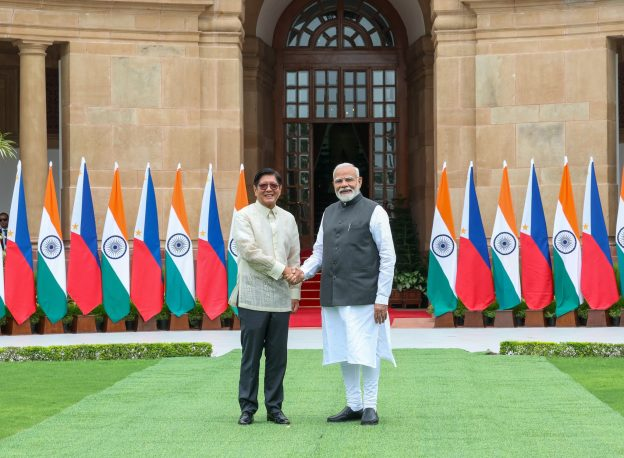
Whether Manila’s strategic shift beyond stagnating ASEAN diplomacy will succeed is anybody’s guess. Marcos has also made forging expanded defense partnerships a foreign policy priority in this term, revealing a slew of new and widened engagements with multiple nations including New Zealand, Germany and India. Already, CSIS research has revealed that the number of countries calling upon China to abide by the 2016 ruling has tripled to 26 since Marcos came into power, proving that renewed diplomatic engagement has yielded at least symbolic results.
Regardless of utilising existing ASEAN mechanisms or returning to the international arena, securing a compromise from Beijing would never be easy. But a fresh hand may just open new doors for Manila come 2026.
References
ASEAN Secretariat. (2004, December 7). Terms of Reference of the ASEAN-China Joint Working Group on the Implementation of the Declaration on the Conduct of Parties in the South China Sea. https://asean.org/terms-of-reference-of-the-asean-china-joint-working-group-on-the-implementation-of-the-declaration-on-the-conduct-of-parties-in-the-south-china-sea-2/
ASEAN Secretariat. (2023, December 21). 2002 Declaration on the Conduct of Parties in the South China Sea. NUS Centre for International Law. https://cil.nus.edu.sg/databasecil/2002-declaration-on-the-conduct-of-parties-in-the-south-china-sea/
Asia Maritime Transparency Initiative. (2016, June 16). Arbitration Support Tracker. Center for Strategic and International Studies. https://amti.csis.org/arbitration-support-tracker/
Baviera, A. (2001). Bilateral confidence building with China in relation to the South China Seas dispute: A Philippine perspective. Academia.edu; international.gc.ca. https://www.academia.edu/2467965/Bilateral_confidence_building_with_China_in_relation_to_the_South_China_Seas_dispute_A_Philippine_perspective
Beltran, S. (2025, November 25). Can the Philippines manage Asean’s Myanmar crisis while advancing South China Sea code? South China Morning Post. https://www.scmp.com/week-asia/politics/article/3333997/can-philippines-manage-aseans-myanmar-crisis-while-advancing-south-china-sea-code
Council on Foreign Relations. (2025). Timeline: China’s Maritime Disputes. Council on Foreign Relations. https://www.cfr.org/timeline/chinas-maritime-disputes
Darmawan, A. (2022). Managing Expectations: South China Sea Code of Conduct Under Indonesia’s ASEAN Chairmanship. https://www.rsis.edu.sg/wp-content/uploads/2022/12/IP22085.pdf
Duong, H. (2015, July 1). A Fair and Effective Code of Conduct for the South China Sea. Asia Maritime Transparency Initiative. https://amti.csis.org/a-fair-and-effective-code-of-conduct-for-the-south-china-sea/
Lin, J., & Sothirak, P. (2025, May 28). The Elusive Code: Why ASEAN Needs a New Playbook for the South China Sea. The Elusive Code: Why ASEAN Needs a New Playbook for the South China Sea. https://www.iseas.edu.sg/wp-content/uploads/2025/05/ISEAS_Perspective_2025_39.pdf
Liu, M. (2025, July 22). The 2016 South China Sea Arbitration and the Limits of International Law. The Diplomat. https://thediplomat.com/2025/07/the-2016-south-china-sea-arbitration-and-the-limits-of-international-law/
Ministry of Foreign Affairs People's Republic of China. (2019, August 1). The First Reading of the Single Draft Negotiating Text of the Code of Conduct (COC) in the South China Sea Completed Ahead of the Schedule_Ministry of Foreign Affairs of the People’s Republic of China. https://www.fmprc.gov.cn/eng/gjhdq_665435/2675_665437/2787_663568/2789_663572/202406/t20240607_11414121.html
Nguyen, T. (2024, October 21). The Chagos Archipelago Advisory Opinion and Decolonisation. NUS Centre for International Law. https://cil.nus.edu.sg/blogs/the-power-of-the-world-court-unleashed-the-chagos-archipelago-advisory-opinion-and-decolonisation/
Poling, G. B. (2025). How to Slay a Giant: Reviving the South China Sea Arbitration. Center for Strategic and International Studies. https://www.csis.org/analysis/how-slay-giant-reviving-south-china-sea-arbitration
Sato, M. (2025, November 7). Rhetoric vs. Reality: The Philippines, ASEAN, and the South China Sea. Center for Strategic and International Studies. https://www.csis.org/analysis/rhetoric-vs-reality-philippines-asean-and-south-china-sea
Schultheiss, C. (2023, July 10). What Has China’s Lawfare Achieved in the South China Sea? ISEAS-Yusof Ishak Institute. https://www.iseas.edu.sg/wp-content/uploads/2023/06/ISEAS_Perspective_2023_51.pdf
Seo, Y. (2024). Power Shift, the South China Sea Dispute, and the Role of International Law. Michigan Journal of International Law, 45.1, 93. https://doi.org/10.36642/mjil.45.1.power
Strangio, S. (2025, November 18). Philippines Hoping to Conclude South China Sea Code of Conduct in 2026. The Diplomat. https://thediplomat.com/2025/11/philippines-hoping-to-conclude-south-china-sea-code-of-conduct-in-2026/
Thayer, C. (2018, August 3). A Closer Look at the ASEAN-China Single Draft South China Sea Code of Conduct. The Diplomat. https://thediplomat.com/2018/08/a-closer-look-at-the-asean-china-single-draft-south-china-sea-code-of-conduct/
Thayer, C. (2025, January 27). The State of the South China Sea: Coercion at Sea, Slow Progress on a Code of Conduct. The Diplomat. https://thediplomat.com/2025/01/the-state-of-the-south-china-sea-coercion-at-sea-slow-progress-on-a-code-of-conduct/
Thayer, C. A. (2013, October 9). New Commitment to a Code of Conduct in the South China Sea? The National Bureau of Asian Research (NBR). https://www.nbr.org/publication/new-commitment-to-a-code-of-conduct-in-the-south-china-sea/


Comments